72V Battery Fit-Finder for Builders

72V Battery Fit-Finder for Builders

Four 72V packs, one real decision: how many amps your motor actually pulls. This page starts from your motor wattage, converts it to continuous current at 72 volts, and only then points you at a pack — from the 35Ah entry SKU up to the 40.6Ah workhorse rated for 5000–12000W motors. If you are sizing a 72v battery for electric fat bike builds around a 340 × 140 × 205 mm envelope, or you simply want to buy 72v electric bike battery packs that arrive with UN38.3, CE, MSDS and ISO9001 paperwork behind them, the numbers below are the ones to check before anything goes in a cart.

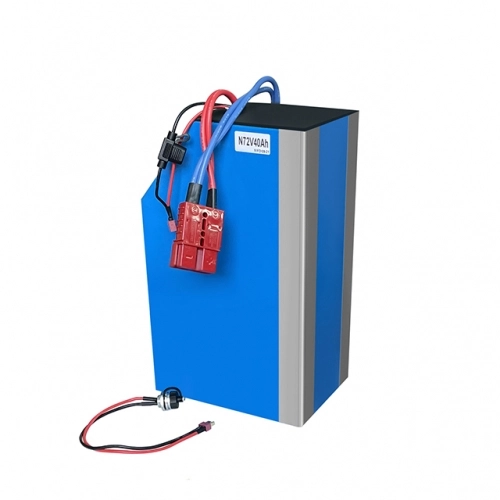
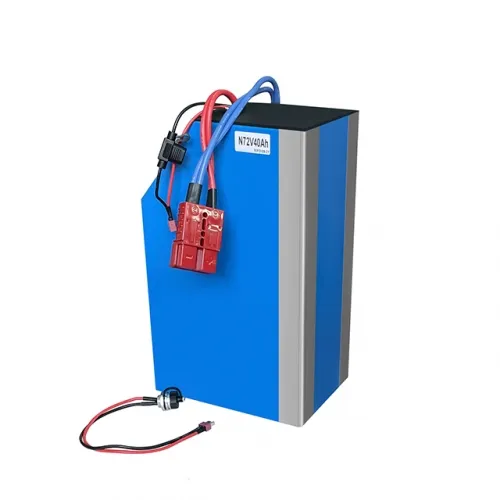
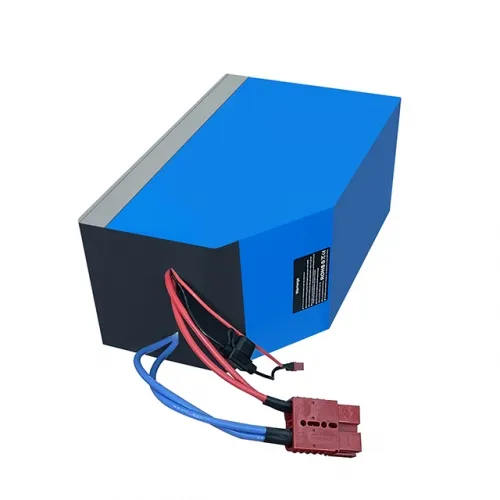
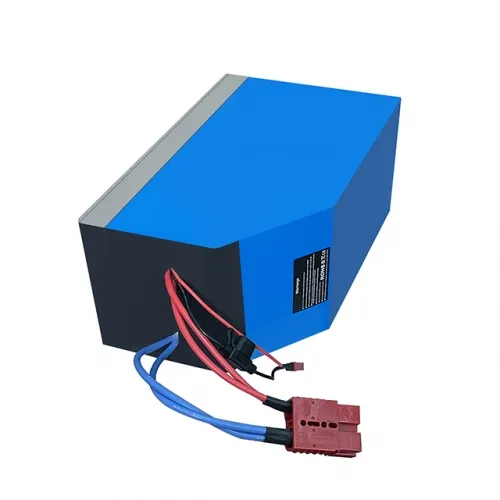
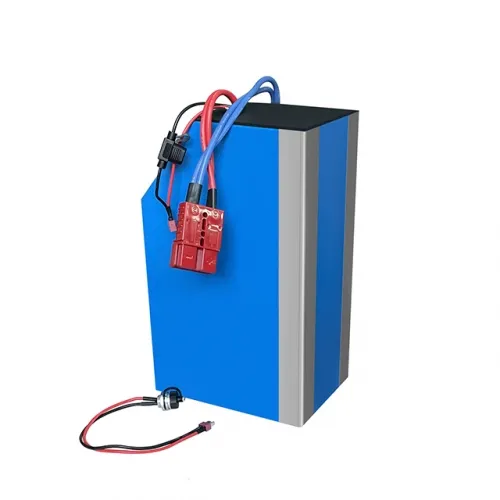
72V 40.6Ah Ebike Lithium Battery

The four 72V packs, side by side

AbleBike lists four 72V lithium packs — 35Ah, 40.6Ah, 44.8Ah and 48Ah — priced from $949 to $1,249. Capacity is not the deciding variable. Continuous current is: motor watts divided by 72 volts gives the amps the pack has to hand over, and the pack’s BMS rating has to sit above that number with headroom left over. The 40.6Ah pack publishes 120A, 2923.2Wh and a 5000–12000W motor rating; the other three are quoted with their own spec sheets rather than estimated here.

Pack Voltage Energy BMS / discharge Rated motor Size L × W × H Price
72V 35Ah 72V On request On request On request On request $949.00
72V 40.6Ah 72V 2923.2Wh 120A 5000 / 6000 / 8000 / 12000W 340 × 140 × 205 mm (bottom)
340 × 140 × 135 mm (top)
$1,049.00
72V 44.8Ah 72V On request On request On request On request $1,199.00
72V 48Ah 72V On request On request On request On request $1,249.00

Only the 40.6Ah column is published in full on its product page. Cells in the 35Ah, 44.8Ah and 48Ah rows are filled from that pack’s own specification sheet on request, so no figure above is inferred from capacity.

Start with your motor, not the label

Continuous amps are simply motor watts divided by pack voltage. Add roughly 20% headroom on top, and that is the minimum protection-board rating worth buying. Run your own number down the ladder.

Motor wattse.g. 5,000W
→
÷ 72V≈ 69A continuous
→
× 1.2 headroom≈ 83A minimum board
→
120A packclears it with margin
Motor Draw at 72V What that means for the pack
3,000W42A

3,000 ÷ 72 ≈ 42A continuous.

With 1.2× headroom you want a board rated for roughly 50A.

The 40.6Ah pack’s 120A board is nearly three times this draw.

A smaller pack in the ladder may serve a low-power build better — confirm its BMS rating first.

→
5,000W69A

5,000 ÷ 72 ≈ 69A continuous.

1.2× headroom puts the minimum board at about 83A.

The 120A BMS clears this with roughly 37A of margin.

This is the pack’s stated 5000W rating, so it is comfortably inside its envelope.

→
6,000W83A

6,000 ÷ 72 ≈ 83A continuous.

Headroom brings the requirement to about 100A.

Still under the 120A rating, with about 20A spare.

Keep an eye on controller current limits rather than motor marketing watts.

→
8,000W111A

8,000 ÷ 72 ≈ 111A continuous.

Headroom would ask for about 133A — above the board’s rating.

You are at the ceiling: the pack serves 8000W-class motors, but sustained full-throttle pulls leave no margin.

Plan burst riding, not continuous.

→
12,000W167A

12,000 ÷ 72 ≈ 167A continuous.

That exceeds the 120A board by a wide margin.

The page lists 12000W among rated powers; read it as peak output.

If your build genuinely needs 167A continuous, say so in your inquiry rather than assuming this pack covers it.

→

One rule before you pick: size the pack against your controller’s battery-current limit, not the number printed on the motor. A 5000W motor with a 150A controller will pull 150A whether or not the motor needs it.

Range math, not range promises

Range is energy divided by consumption. Run the arithmetic with your own terrain figure and you get a planning number instead of a marketing number.

Energy (Wh) ÷ Consumption (Wh per mile) = Miles Worked on the 40.6Ah pack: 2923.2Wh ÷ 45 Wh/mi ≈ 65 miles | 2923.2Wh ÷ 30 Wh/mi ≈ 97 miles
Terrain / riding style Consumption band (Wh/mi) Miles from 2923.2Wh What usually pushes you to the top of the band
Flat pavement, part throttle 25–35 84–117 mi High tire pressure, steady speed, little stop-start
Mixed fat-bike trail 30–45 65–97 mi Soft surfaces, rider weight, repeated acceleration
Steep enduro, throttle heavy 40–60 49–73 mi Climbing, heat, cold ambient temperature

These are consumption bands, not guarantees. Rider weight, tire pressure, ambient temperature, elevation and throttle discipline move real-world consumption by roughly ±30%. Use the middle of the band for route planning and keep a reserve you are willing to pedal home on.

The 340 × 140 × 205 mm envelope

Electrical fit gets the pack to the motor. Physical fit gets it onto the bike. The 40.6Ah pack is listed as a cuboid, 340 mm long and 140 mm wide, with a 205 mm height at the bottom and 135 mm at the top.

340 mmOverall length — the dimension that usually decides frame-triangle placement
140 mmWidth — check crank and pedal clearance on narrow bottom brackets
205 / 135 mmHeight at the bottom and at the top — the pack is not a plain box, so measure both ends

Check 1 — frame triangle

Measure the usable triangle after you allow for suspension travel, the shock body and bottle bosses. A 340 mm length is the number that fails first on compact fat-bike frames.

Check 2 — rear rack or battery box

A rear rack or a stealth-bomber style box accepts the footprint more easily, but a 205 mm base height still has to clear the rear tire under full compression.

Check 3 — mounting and cable exit

Leave room for the discharge lead, the charge port and a bracket. A pack that touches the frame is a pack that will eventually wear through its own insulation.

Buyer decision

If your clearances come in under 340 × 140 × 205 mm, do not order and hope. Send the tray dimensions with your inquiry and confirm the build before payment — the pack is offered as a cuboid, and mounting hardware is your side of the job.

Why 72V, and what a 120A BMS actually does

Why builders move from 48V to 72V

At the same motor power, higher voltage means lower current. 5,000W at 72V draws about 69A; the same 5,000W at 48V draws about 104A.

  • Lower current means less heat in cables, connectors and controller FETs.
  • Lower current means thinner, easier-to-route harnesses on a custom frame.
  • Lower current means the protection board has more room above your working draw.

That is the engineering case. The practical case is that your motor, controller and charger all have to be 72V-rated — a 48V charger will not fill this pack.

What the 120A board covers

The 40.6Ah pack ships with a 120A lithium battery protection board; PCM/BMS is listed as included, and OEM or ODM work on it is accepted.

Treat 120A as the continuous current ceiling the board is built for. Below it you have margin; at it you are at the limit; above it you are outside the stated envelope and the pack is no longer the right choice for the build.

The pack is assembled from Chinese 18650 3C 2900mAh cells, rated 800–1000 cycles, and charges between 0°C and 45°C — worth knowing if you ride in winter.

Match your build to a pack

Four common builds, the specification that decides each one, and the buying decision that follows.

Trail fat bike, 5000–6000W

Spec that decides it
69–83A continuous draw, so a board rated 100A+ with headroom.
Why this pack
120A BMS and 2923.2Wh give you margin at 5000W and a still-workable margin at 6000W.
Decision
Buy the 40.6Ah pack if your controller is capped near 120A battery current.
Enduro chassis, 8000W

Spec that decides it
111A continuous, which is already inside the 120A rating but with almost no headroom.
Why this pack
The 8000W figure is a stated rating, so the pack qualifies — the question becomes duty cycle.
Decision
Set your controller current limit below 120A, or accept burst-only use at full power.

Long-distance commuter or cargo build

Spec that decides it
Energy, not amps. 2923.2Wh is the figure that converts to miles.
Why this pack
Roughly 65–97 miles on the trail bands above, plus a 15-month battery warranty and 800–1000 cycles.
Decision
Run the range formula with your own Wh/mi before choosing between 40.6Ah, 44.8Ah and 48Ah.

Fleet, OEM or custom build

Spec that decides it
Repeatability: identical packs, identical paperwork, identical connectors.
Why this pack
OEM/ODM accepted on PCM/BMS, 18650 cells, ISO9001 / CE / MSDS / UN38.3 documentation.
Decision
Request a quote with quantities, target specs and connector requirements before committing to a batch.

Compare the four packs

The price ladder runs in $50–$150 steps. The 40.6Ah pack is the only one whose full specification is published, which makes it the reference point for the other three.

72V 35Ah ebike lithium battery

72V 35Ah

Entry point$949.00

The lowest-cost way into the 72V range. BMS rating and dimensions are confirmed per pack before ordering.

Request the 35Ah spec sheet →
Full specs 72V 40.6Ah ebike lithium battery

72V 40.6Ah

120A BMS · 2923.2Wh$1,049.00

Rated for 5000 / 6000 / 8000 / 12000W motors, 800–1000 cycles, 148 units listed in stock and shipped from China.

View pack and buy →
72V 48Ah ebike lithium battery

72V 48Ah

Largest capacity$1,249.00

The top of the ladder for long-range builds. Confirm the size and BMS rating against your frame first.

Request the 48Ah spec sheet →
15-month battery warranty ISO9001 · CE · MSDS · UN38.3 800–1000 charge cycles Ships from China In-stock items ship next business day OEM / ODM accepted

Tell us your motor, controller and frame clearance

Four numbers get you a straight answer instead of a guess: motor watts, controller battery-current limit, the free space in your frame in millimetres, and the miles you actually need. Send those and we will confirm which pack fits — or quote an OEM/ODM build if none of the four does.

Related Reading

Three notes to help clarify product requirements before contacting the supplier.

72V and 48V Battery Systems Differ for Off-Road Electric Fat Bikes

Comparing 72V and 48V fat bike batteries comes down to voltage window, current demand, controller tolerance, and rider fit rather than a bigger number meaning a better ride.

Read article

BMS Protection Inside High-Capacity 72V E-Bike Battery Packs

A 72V e-bike pack protects itself through cell-group voltage sensing, current limits, thermal sensors, short-circuit response, and balancing, and each layer answers a different failure question.

Read article

Matching a 72V E-Bike Controller to Connectors and Wiring

A 72V retrofit succeeds when voltage windows, controller current limits, connector ratings, and wire gauge all line up as one system rather than as separate parts.

Read article

Frequently Asked Questions

what information is shown for this product?

review the product details, images, and specifications presented on the official product page.

where can i check the intended application?

use the application and use-case information published on the official product page.

which specifications should i confirm before ordering?

confirm the specifications and options listed for the exact product variant before placing an order.

where can i check available options?

check the official product page or ask the supplier about options shown for the selected product.

how can i request product information?

use the official contact or inquiry path provided on the site.

what should i include in an inquiry?

include the product page, intended use, required quantity, and any specifications you need the supplier to review.

© 2026 Changzhou Able Electronic Technology Co., Ltd. All Rights Reserved. POWERED BY UEESHOP