

 USD
USD EUR
EUR GBP
GBP CAD
CAD AUD
AUD KRW
KRW
About Us
You can know more about AbleBike from About-Us, and you can get more information about e bike hub motor kit, electric fat bike and electric enduro bike from our online store, you c
View productelectric fat bike battery and electric enduro bike battery. Choosing the right or comes down to five decisions: power versus range, BMS protection, real cycle life, mounting fit, and the reliability of the manufacturer behind it. This guide works through each factor using the AbleBike 72V 40.6Ah lithium battery as the reference, so you can compare specifications, avoid costly mismatches, and order with confidence.
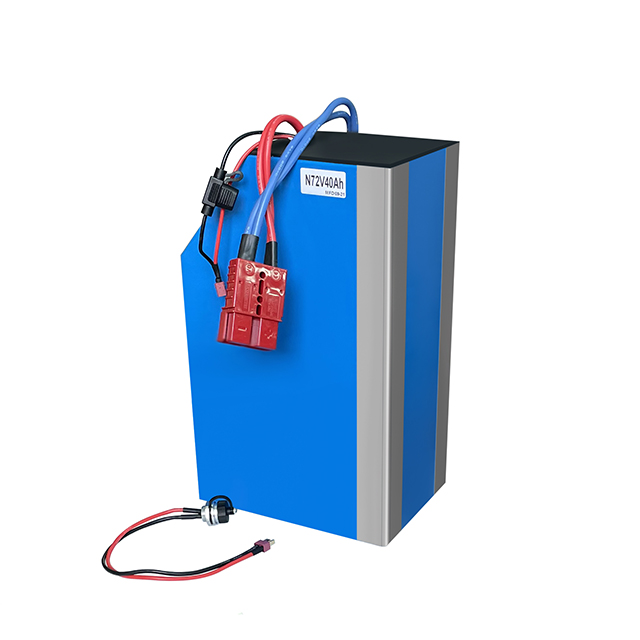
The same 2923.2Wh pack has to serve a fat tire bike that values distance and an enduro e-bike that demands bursts of speed. Your job is to decide where the balance sits for your build.
The 72V 40.6Ah battery stores 2923.2Wh of energy. Divide that energy by the motor’s continuous demand and you get a planning figure for full-power ride time:
| Motor power | Full-power run time (2923.2Wh) | Typical riding pattern |
|---|---|---|
| 5000W | ~35 minutes | Mixed fat-tire trail riding |
| 6000W | ~29 minutes | Enduro climbs and technical bursts |
| 8000W | ~22 minutes | High-speed straight runs |
These are planning figures, not range guarantees. Continuous full throttle is the extreme case; pedal assist, coasting, terrain, and tire pressure extend real-world distance well beyond these numbers.
Fat tire bikes roll with more resistance, so capacity per kilometer is what matters most. The 40.6Ah rating is the number to compare when range is your priority.
Enduro bikes put power in short, sharp bursts. The pack’s compatibility with 6000W and 8000W rated motors tells you it can feed those bursts without the BMS cutting in early.
A battery is only as safe as its control board. The 120A BMS is what makes high power usable without turning the pack into a liability.
The BMS 120A lithium battery protection board sits between the cells and your controller. It manages current flow, balances the 18650 cells, and keeps the pack inside its designed charge and discharge window. On a 72V system, that 120A discharge rating is what allows a 6000W or 8000W motor to pull hard under load without overstressing the electronics.
Temperature behavior is a concrete spec, not a footnote. The pack charges between 0°C and 45°C and discharges between -20°C and 65°C. Winter fat-tire riders can keep drawing power in cold conditions as long as they charge indoors above freezing.
Purchase price is the first number buyers see. Cycle life is the number that decides whether a pack is economical after three years of service.
| Metric | AbleBike 72V 40.6Ah | Typical market baseline |
|---|---|---|
| Cycle life | 800–1000 times | ~500 cycles |
| Cell type | Chinese 18650 3C 2900mAh | Standard 18650 cell |
| Warranty | 15 months | 12 months |
Baseline figures are general market references for comparing supplier quotes, not claims about another specific product.
The 800–1000 cycle rating comes from the 18650 3C 2900mAh cells and the BMS’s controlled charge profile. For a fleet, that range becomes a replacement schedule: at roughly one full discharge per day, the pack serves two to three years before you plan the next purchase.
Based on the listed $1,049.00 price divided by 800–1000 cycles. The 15-month warranty covers early failures before you reach that payback.
The most powerful battery in the world is useless if it does not sit cleanly in the frame. Fit is a measurement, not a guess.
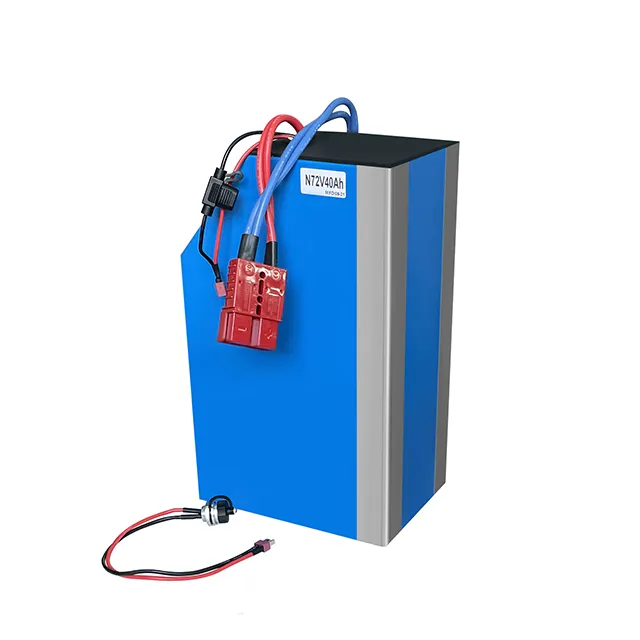
340 × 140 × 205mm (bottom)
340 × 140 × 135mm (top)
The pack uses a cuboid shape with a taller bottom section and a tapered top, which is designed to sit in a frame triangle or a dedicated battery tray. The fixed footprint is 340mm long and 140mm wide, so the first check is simple: measure the available length and width in your frame, then confirm height at both the lower and upper mounting points.
Fat tire frames usually have wide downtubes and generous triangles, which simplifies fit. Enduro bikes with full suspension need extra clearance for suspension travel — a pack that fits on the bench can rub a swingarm in the field.
Beyond e-bikes, the pack is listed for electric vehicles, scooters, balance vehicles, golf carts, and general electric equipment. The same dimension check applies to every mounting.
Four common buying scenarios, each with the specification that should anchor your decision.
Range is the bottleneck, not peak current. Capacity and footprint drive the decision.
Anchor specs: 2923.2Wh capacity • 40.6Ah • 340×140×205mm
High-power motors draw roughly 111A at nominal voltage — the BMS must keep up.
Anchor specs: BMS 120A • Discharge 120A • Rated power 5000–12000W
Cold weather kills underspecified packs. Discharge range and charging limits matter.
Anchor specs: Discharge –20°C to 65°C • Charge 0°C to 45°C
Cost per cycle, warranty, and customization determine whether the deal works at volume.
Anchor specs: 800–1000 cycles • 15-month warranty • OEM/ODM cells and PCM/BMS
Keep adjacent product options together for a faster catalog comparison.
You can know more about AbleBike from About-Us, and you can get more information about e bike hub motor kit, electric fat bike and electric enduro bike from our online store, you c
View product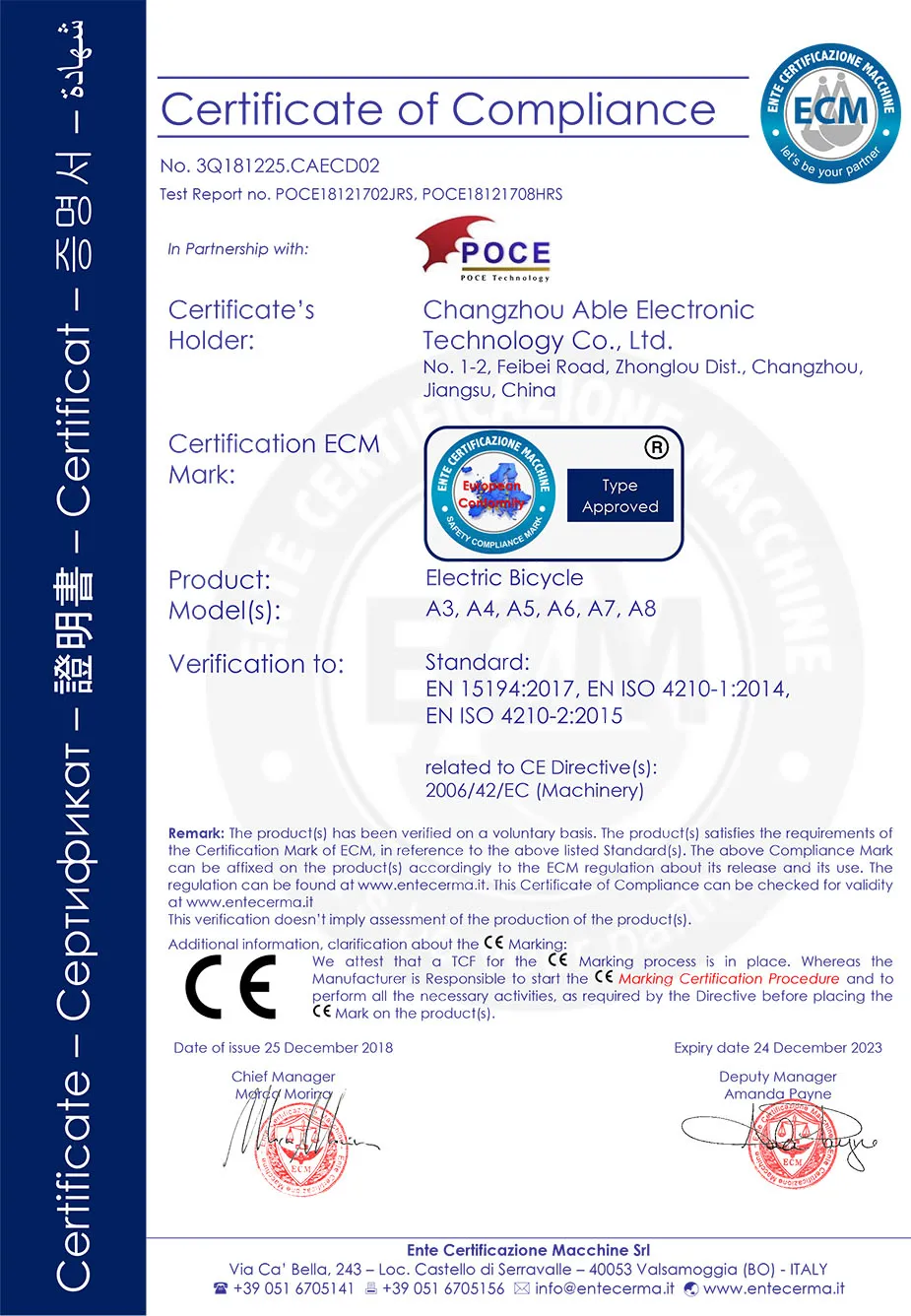
AbleBike is always pay more attention to the quality control for electric fat bike, electric enduro bike and hub motor kit, we operate the company according to IOS/TS 16949, EN1519
View product
Build a fast ride with the AbleBike 3000w ebike kit. Check specs and reviews for this 72 volt conversion kit and 72v 3000w hub motor kit.
View productthe battery delivers 72v with 40.6ah of capacity, storing 2923.2wh of energy. that high capacity is designed to give fat tire and enduro electric bikes a longer running distance per charge.
the pack is rated for 5000w, 6000w, and 8000w motors, with a rated power specification extending to 12000w. its 120a bms and 120a continuous discharge support the high current draw of these motors.
the battery is rated for 800 to 1000 charge cycles using chinese 18650 3c 2900mah cells. it is backed by a 15-month battery warranty.
the cuboid pack measures 340*140*205mm at the bottom and 340*140*135mm at the top. measure the length, width, and available height of your e-bike frame triangle or battery tray before ordering.
yes. the cells and pcm/bms accept oem and odm customization. contact ablebike for bulk pricing, custom branding, and configuration options.
the battery carries iso9001, ce, msds, and un38.3 certifications. the 120a bms keeps the pack safe during charging between 0 and 45 degrees celsius and discharging between -20 and 65 degrees celsius.
 No.1-2, Feibei Road, Zhonglou Dist, Changzhou, Jiangsu, China. 213023
 +86-177-51589985
 info@ablebike.com